
What Is Straddling in Poker? Rules, Types and Strategy
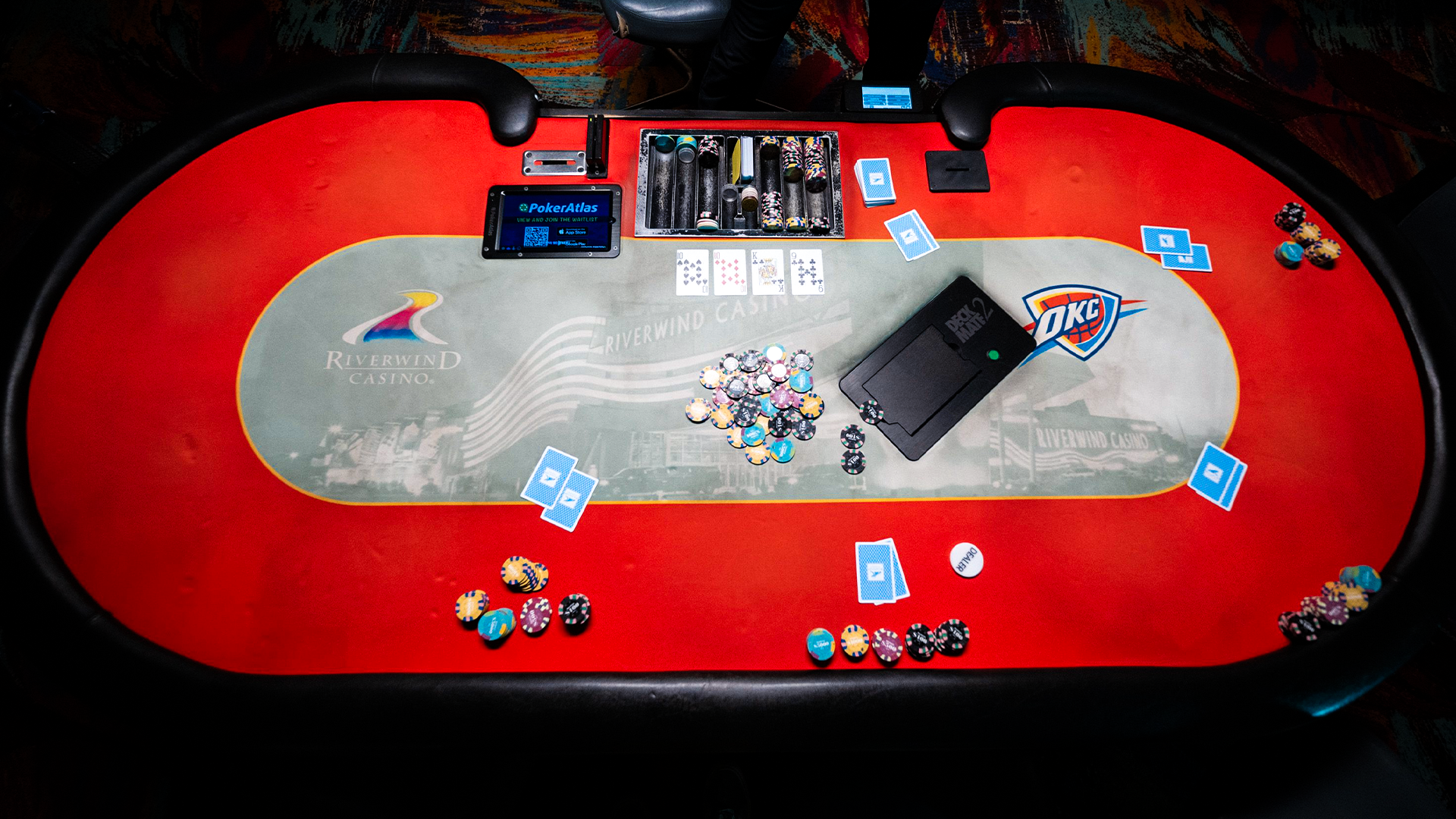
You sit down at a table inside Riverwind Casino and watch chips go in before the deal. The dealer calls out “straddle,” and the whole hand suddenly feels different. A straddle in poker changes the pot size and shifts the betting order before anyone sees a card. This guide breaks down what it means, how it plays out and when it is worth trying yourself.
What Is Straddling in Poker?
A straddle is a voluntary bet placed before any cards are dealt, worth at least double the big blind. It usually comes from the player sitting under the gun, the seat directly to the left of the big blind. The poker straddle meaning comes down to this. You are paying extra to raise the stakes before you have even looked at your hand. Once the chips are in, the hand plays out at a higher level than the posted blinds suggest.
If the preflop betting round is still new to you, it is worth reviewing the basics of how to play poker first, because a straddle changes an order of play you need to already know.
Picture a $1/$3 No Limit Hold ‘Em game:
- Blinds go in as usual, one dollar and three dollars.
- Before any cards are dealt, the under-the-gun player can act.
- That player posts a straddle worth at least six dollars, double the big blind.
- The straddle now acts as the big blind for the entire preflop round.
- Every player after that point calls, raises or folds against six dollars instead of three.
How Do Straddles Work in Poker?
Once the straddle is posted, the hand follows a set sequence.
- The small blind and big blind post as usual.
- The straddler places the straddle before any cards are dealt.
- Cards go out, and betting starts to the left of the straddle.
- Every player calls, raises or folds against the straddle amount.
- The straddler gets the final move before the flop.
Once the flop hits, betting resets to normal order, starting with the first active player left of the dealer button.
Types of Straddles You Might Run Into
House rules shift from room to room. Riverwind Casino staff can walk you through the local version before you sit down. Some rooms only allow a straddle from one seat, while others let almost anyone post one. Here is how the main types differ.
| Straddle Type | Who Posts It | Preflop Advantage | Where It Is Common |
| Under the Gun (UTG) | First player left of the big blind | Straddler acts last preflop | Most live cash rooms |
| Mississippi Straddle | Any player at the table | Whoever straddles acts last | Home games, some casinos |
| Button Straddle | The dealer button | Acts last preflop, acts early post-flop | Select casinos only |
| Double or Triple Straddle | Players left of the first straddler | Shifts to the last straddler | High action cash games |
| Sleeper Straddle | Any seat, but only goes live if action reaches it unopened | Acts last if it goes live | Rooms with looser straddle rules |
| Mandatory Straddle | Built into the game structure | Fixed by house rules | Certain mixed and high-action games |
| Uncapped or No-Limit Straddle | Usually the under-the-gun player | Acts last preflop, with far more at risk | Rooms that set no ceiling on straddle size |
A button straddle keeps its edge past the flop, while double, triple and sleeper straddles follow separate rules. An uncapped straddle is the outlier of the group. Where a room allows it, the straddle can be any amount above the minimum, up to a player’s entire stack, which turns a routine hand into the biggest pot of the session before a single card is dealt.
How a Straddle Changes Your Stack
Straddling does not just raise the pot. It quietly shrinks your stack when measured in big blinds. Here is how that plays out at two different stake levels.
| Game | Chips on the Table | Big Blinds at Posted Stakes | Straddle | Effective Big Blinds After the Straddle |
| $1/$2 | $400 | 200 big blinds | $4, so the hand plays $1/$2/$4 | 100 big blinds |
| $2/$5 | $700 | 140 big blinds | $10, so the hand plays $2/$5/$10 | 70 big blinds |
Fewer big blinds means less room to maneuver after a rough flop. It also means your typical raise size looks smaller compared to the pot. That can pull you into bigger confrontations than you planned for.
Pros and Cons of Straddling
Straddling brings real upside to a hand, along with real risk.
What it can do for you:
- Build a bigger pot right from the start
- Push tight players out of their comfort zone
- Put you last to act before the flop
What it can cost you:
- Money goes in before you see your cards
- Your stack shrinks when measured in effective big blinds
- Your positional edge disappears the moment the flop hits
When to Straddle and When Not To
A tight table full of passive players is often the best spot to try a straddle. It stirs up action and gets passive players calling more than they normally would. Once the pot grows early, some of those same players stay in longer than their hand deserves.
A loose, already aggressive table is the wrong spot for the same move, because the pots are going to get big without your help. Your bankroll matters here too. A straddle doubles the size of the swings, so the usual habits around managing your bankroll matter even more. If a bad beat at double stakes would rattle you, skip the straddle and wait for a better moment to try it.
Adjusting Your Strategy Against a Straddle
You do not need to post a straddle yourself to feel its effect on a hand. When someone else straddles often, the whole table usually tightens up around them. Marginal hands that would normally open the pot start getting folded instead.
A few adjustments help you handle a table with frequent straddles:
- Tighten your calling range slightly, since the pot is already bigger before you see two cards.
- Look for spots to isolate a straddler who plays too many hands.
- Stay patient against players who straddle out of habit rather than strategy.
Suited connectors and small pairs often drop out of opening ranges completely once a straddle is in play, because a weak holding under pressure tends to fold fast. Isolating a loose straddler is often worth the extra chips.
Frequently Asked Questions
What is the purpose of straddling?
A straddle exists to raise the stakes and stir up more action before the deal. Bigger pots create bigger swings, which some players use to pressure tighter opponents into mistakes.
How much is a straddle in poker?
A straddle is at least double the big blind. In a $1/$3 game, that means six dollars, and the hand then plays out as a $1/$3/$6 pot. Some rooms allow larger straddles, and a few set no ceiling at all.
How do you lose money on a straddle?
You post a blind bet before seeing your cards, so weak hands cost you money right away. Your effective stack also shrinks in big blinds, leaving less room to recover from a rough flop.
Is it profitable to straddle in poker?
Over a long stretch of hands, straddling usually costs more than it earns back. It can still pay off at a loose, passive table with weaker opponents. Those players call too much and fold too easily.
Can you straddle in a poker tournament?
Tournaments rarely allow straddles, since blind levels already climb on a fixed schedule. You will mostly find straddling in live cash games, where the stakes stay flat for hours.
Do all casinos allow straddling?
No, and the rules differ quite a bit from room to room. Ask a dealer or floor staff before your session so you know what is allowed at that table.
Ready to Try Straddling in Poker Yourself?
Reading about a straddle only gets you so far. The real feel for it comes from sitting at a table where the chips are actually moving. The poker room at Riverwind Casino runs more than 13 tables and stays open from 9 AM to 3 AM, so there is plenty of time to watch a few orbits before you post anything yourself.
Ask the floor about the straddle rule at your table, since it changes from room to room and from game to game. Watch how poker straddling changes the pace of a hand. Then try one yourself when the moment feels right.









Social Media
Connect with us to stay up to date on Riverwind Casino and you will always be in the know.