
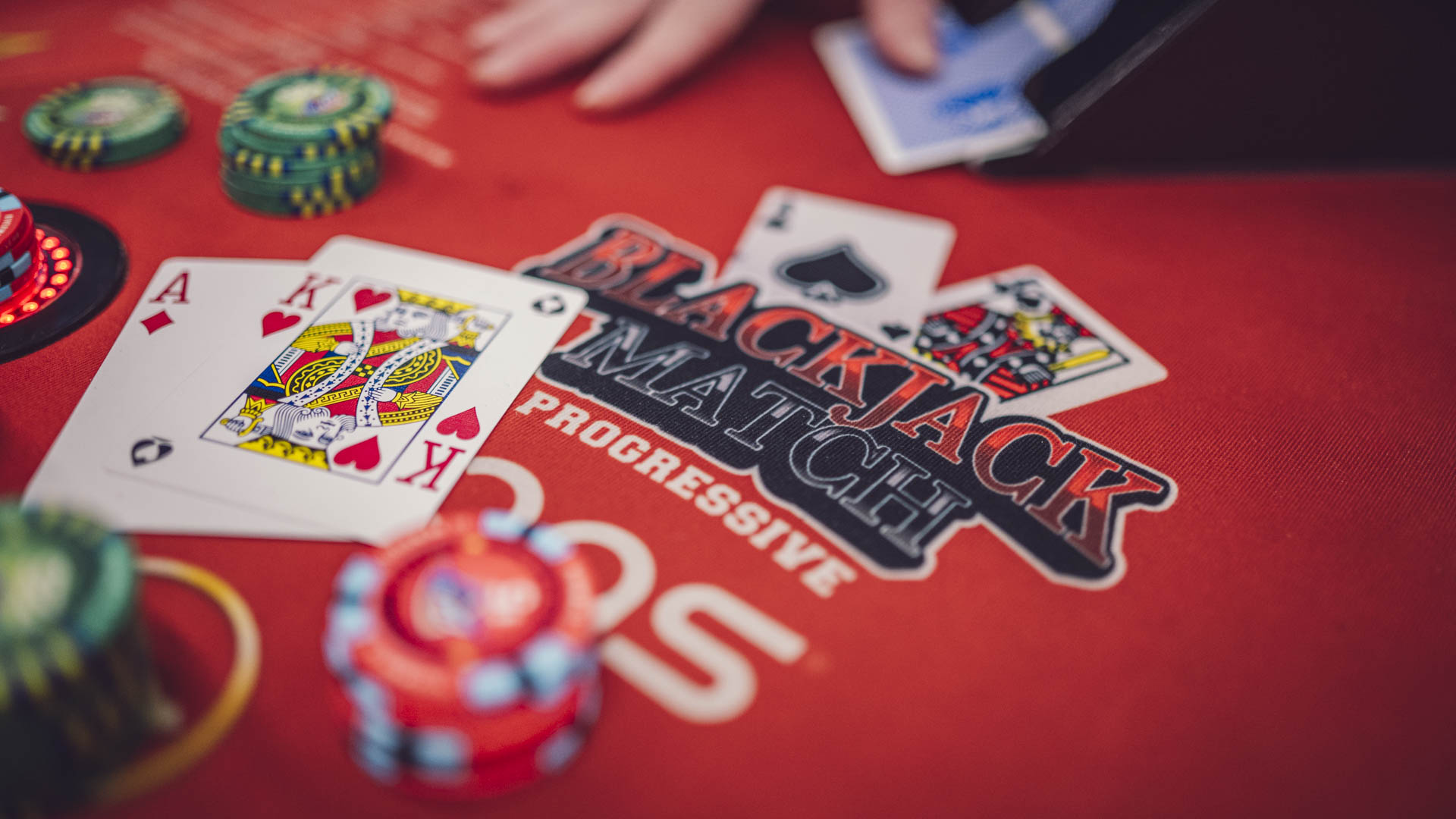
Blackjack is one of the most popular casino games worldwide, known for its mix of skill and chance. Unlike many other games, it allows players to use basic strategy to improve their odds. Its simple rules make it easy to learn, but mastering it takes practice. If you’re wondering how to play blackjack at a casino, this guide will walk you through each step.
How To Play Blackjack
So, how do you play blackjack? The goal of blackjack is to beat the dealer by having a hand total closer to 21 without exceeding it. If your total goes over 21, you automatically lose (bust). If you have a higher hand than the dealer you win. If the dealer’s hand is closer to 21, the dealer wins.
Here’s how blackjack works:
- Blackjack (Natural 21): If you receive an Ace and a 10-value card (10, Jack, Queen, or King) on your initial deal, you have a blackjack.
- Hand Totals: Sum of the values of your cards. Aces can be worth 1 or 11.
- Dealer’s Hand: The dealer follows strict rules—hitting until at least 17.
- Dealer Has a Blackjack: If the dealer gets a blackjack and you don’t, you lose instantly.
Blackjack Table Rules: Setup and Basics
Before learning how to play blackjack, the table is designed with specific areas for both players and dealers, each with its own set of rules to follow. Understanding the layout, the flow of the game and how actions are communicated is crucial for getting started. From the moment you sit down to placing your bets, there’s a structure to how everything unfolds. Here’s a closer look at the key elements of the game:
- Seating & Betting Areas: Blackjack tables accommodate multiple players, each with a designated betting area.
- Minimum Bets: Casinos set different minimum bets, so check before sitting down.
- Initial Bet: Players place their original bet before the dealer deals the cards.
- Card Dealing:
- Each player and the dealer receive two cards.
- Players’ cards are dealt face-up.
- The dealer has one face-up card and one hole card (face-down).
- Hand Signals: Instead of speaking, players use specific gestures to communicate actions:
- Hit: Tap or scratch the table.
- Stand: Wave your hand horizontally.
- Double Down: Place additional chips beside your original bet.
- Split: Separate matching cards and place an additional bet.
- Basic Rules:
- If your hand total exceeds 21, you bust and lose the round.
- If the dealer busts, all remaining players win.
- If you and the dealer have the same total, it’s a push (tie), and your bet is returned.
- Face cards (J, Q, K) and 10s are worth 10 points.
- Aces can be worth 1 or 11, depending on what benefits your hand.
- All other cards retain their face value.
Step-by-Step Guide in a Game of Blackjack
Placing Your Bet
To start, place your initial bet in the betting circle. Some tables allow side bets, which can add excitement but increase risk.
Dealing the Cards
The dealer gives each player two face-up cards and deals themselves one face-up and one face-down (hole card). If the dealer has an Ace showing, they may offer an insurance bet.
Understanding Hand Totals
Your hand total determines your strategy:
- Soft hand: A hand with an Ace counted as 11.
- Hard hand: A hand where an Ace must be counted as 1.
- Soft Totals: It’s generally recommended to hit soft totals (containing an Ace counted as 11) less than 17, and to stand on a soft 18, 19 or 20.
- Hard Totals: Hard totals (no Ace counted as 11) below 17 typically warrant hitting, with exceptions for certain dealer upcards.
Time For Player Decision Options
Hit or Stand?
Deciding whether to hit or stand is one of the most critical choices in blackjack. A hit means taking an additional card to try and improve your hand, while standing means keeping your current total. The key to making the right choice is understanding when to take a risk and when to play it safe. A general guideline is to hit if your total is under 17 and stand if it’s 17 or higher, but this decision should also factor in the dealer’s face-up card.
- Hit: Take an additional card to increase your total if your hand is under 17.
- Stand: Keep your current hand total if your hand is over a 17.
- Strategy: Base your decision on the dealer’s face-up card.
Doubling Down
Doubling down is a high-risk, high-reward move where you double your original bet in exchange for one final card. It’s an aggressive strategy that works best in specific scenarios, particularly when you have a strong starting hand.
- Double Down: Double your original bet for one additional card.
- Best situations: When you have a total of 10 or 11.
Splitting Pairs
If you receive two cards of the same rank, you have the option to split them into two separate hands, placing an additional bet equal to your original one. This allows for more winning opportunities but comes with specific rules, especially for face cards and Aces.
- Split if you receive two cards of the same rank.
- Face cards (J, Q, K) can be split.
- Aces: Splitting Aces gives only one additional card per hand.
Insurance Bets and Surrender
Casinos offer insurance bets and surrender options as ways to minimize losses, but they are often not recommended for most players.
- Insurance Bet: Offered when the dealer’s hand shows an Ace. Typically a bad bet.
- Surrender: Some casinos allow you to fold for half your bet if you have a weak hand.
Dealer’s Turn: What Happens Next?
Once all players have made their moves, it’s the dealer’s turn. Unlike players, the dealer must follow strict rules when drawing cards. These rules determine whether they hit (take another card) or stand (keep their current total). Understanding these rules helps players anticipate the dealer’s potential hand outcome.
- Must Hit: The dealer is required to take another card if their total is 16 or lower.
- Must Stand: The dealer must stop drawing cards if their total is 17 or higher.
Winning, Losing and Payouts
At the end of each round, the outcome depends on your hand compared to the dealer’s. Winning, losing, or pushing (tying) determines how your bet is handled.
- You Win If:
- You have a higher total than the dealer’s hand without busting.
- The dealer busts by exceeding 21.
- You get a natural blackjack (an Ace and a 10-value card), which usually pays 3:2 or 6:5, depending on the casino.
- You Lose If:
- Your total exceeds 21, resulting in a bust.
- The dealer has a higher total than you at the end of the round.
- Push (Tie):
- If you and the dealer have the same total, it’s a tie, and your bet is returned to you.
Play Blackjack with Confidence at Riverwind Casino
Now that you’re familiar with how to play blackjack at the casino, you’re ready to sit at the blackjack table and enjoy the game.
At Riverwind Casino, you’ll find a thrilling blackjack experience with professional dealers and a welcoming atmosphere. Whether you’re just starting out or you’re a seasoned player, it’s the perfect place to test your skills and enjoy the game.









Social Media
Connect with us to stay up to date on Riverwind Casino and you will always be in the know.